Future New York Storytelling - No Stone Tombstone
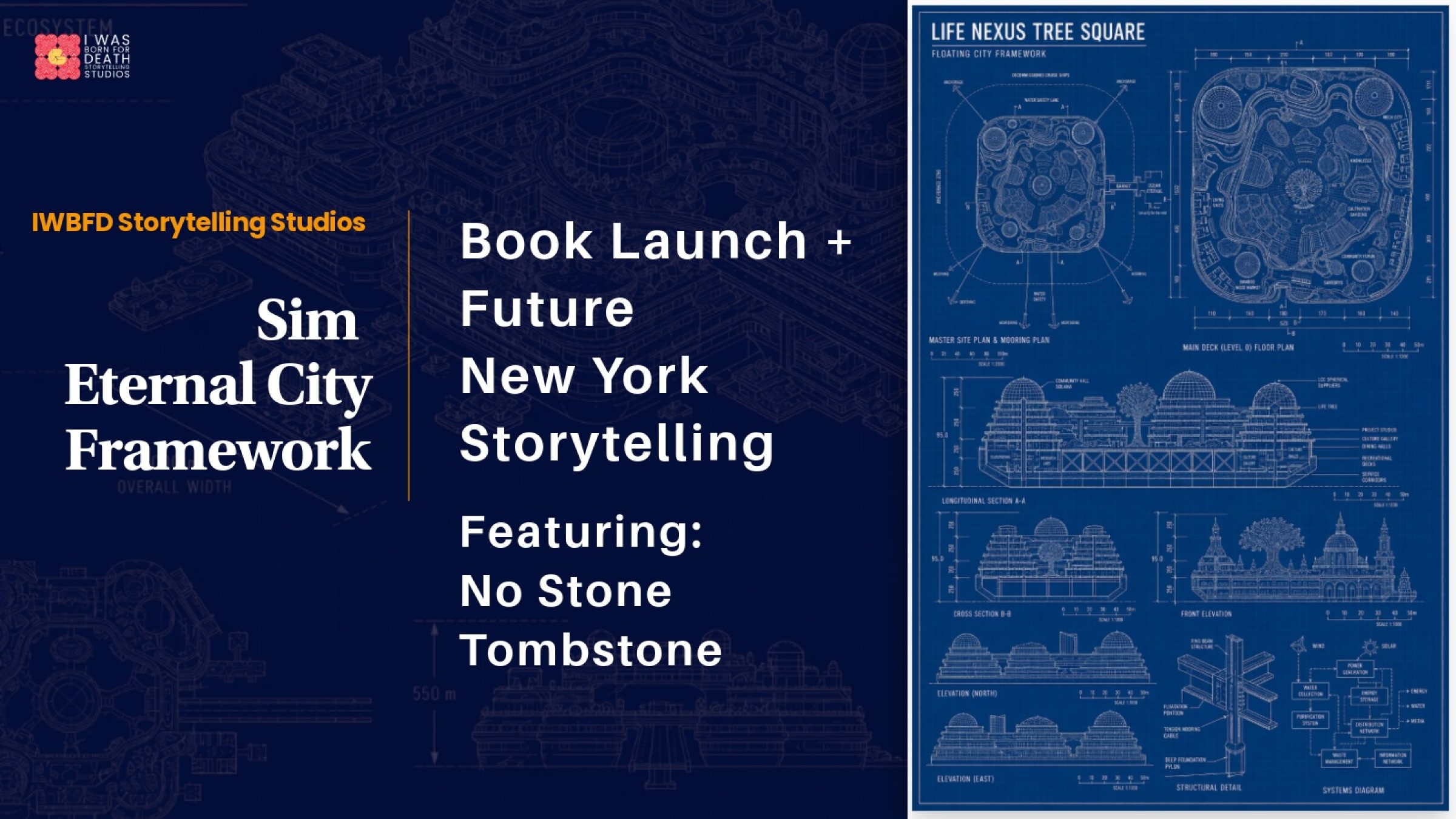
Climate rises. Coasts recede. Where the Statue of Liberty stands in view, elders are losing the ground beneath them. Sim Eternal City tells what comes next — a city where Land and Floating neighborhoods coexist, and No Stone Tombstone reimagines memory when land turns transient. Not just New York's future. Ours.
Climate change is not an abstraction on the New York waterfront. Where the Statue of Liberty still stands in view, the tide already laps at the doorstep, and the coastline is measurably receding. What is disappearing is not only land. It is the memory, the belonging, the physical texture of the neighborhoods generations have called home.
In this transition, the young and the wealthy will move. Elders, often, will not. They will stay — in neighborhoods that flood, in housing that was never designed for what is coming, in cities that were not built for how long they will live. New York is entering a super-aged society at the same time its coasts are retreating. There is no framework for this yet. There is only a question.
Sim Eternal City is a storytelling response. Instead of a Noah's Ark of retreat, it proposes a city where Land and Floating neighborhoods coexist — where elders remain producers, not passengers. At its center is the 18-Minute City: essential life within a dignified walking distance for an aging body. This is not a 15-minute optimization. It is a slower, more generous radius, designed for the pace of a life in its later chapters.
Within this framework, No Stone Tombstone — rooted in Red Hook — reimagines what a memorial is when land itself is transient. Funeral Vehicles on community streets. Kiosk cemeteries embedded in LinkNYC. A ten-year cycle after which physical memorials become digital legacies, returning land to the living. It is an answer to the memorial crisis and the public housing crisis at once.
This is not only New York's story. It is the future city we will all have to live in — wherever the water is rising, wherever the population is aging.
The evening: a reading from Sim Eternal City: A Framework for Future City Storytelling (IWBFD Books, May 2026) by Paul J. J. Kang — urban storyteller, Founder & Chief Storyteller of IWBFD Storytelling Studios. Followed by a presentation of the New York Storytelling Project Plan by Vignan Ganji and Meet Suresh Mistry, and an open conversation with the audience. Drinks on the waterfront.
Come if you design cities, rethink what elder and robot citizens can be together, imagine the co-existence of Floating and Land cities, think about climate and memory — and plan on the future city.
Hosted by