May 15–17: closed
May 18–20: 10am–5pm
Kitchen Table Imagery
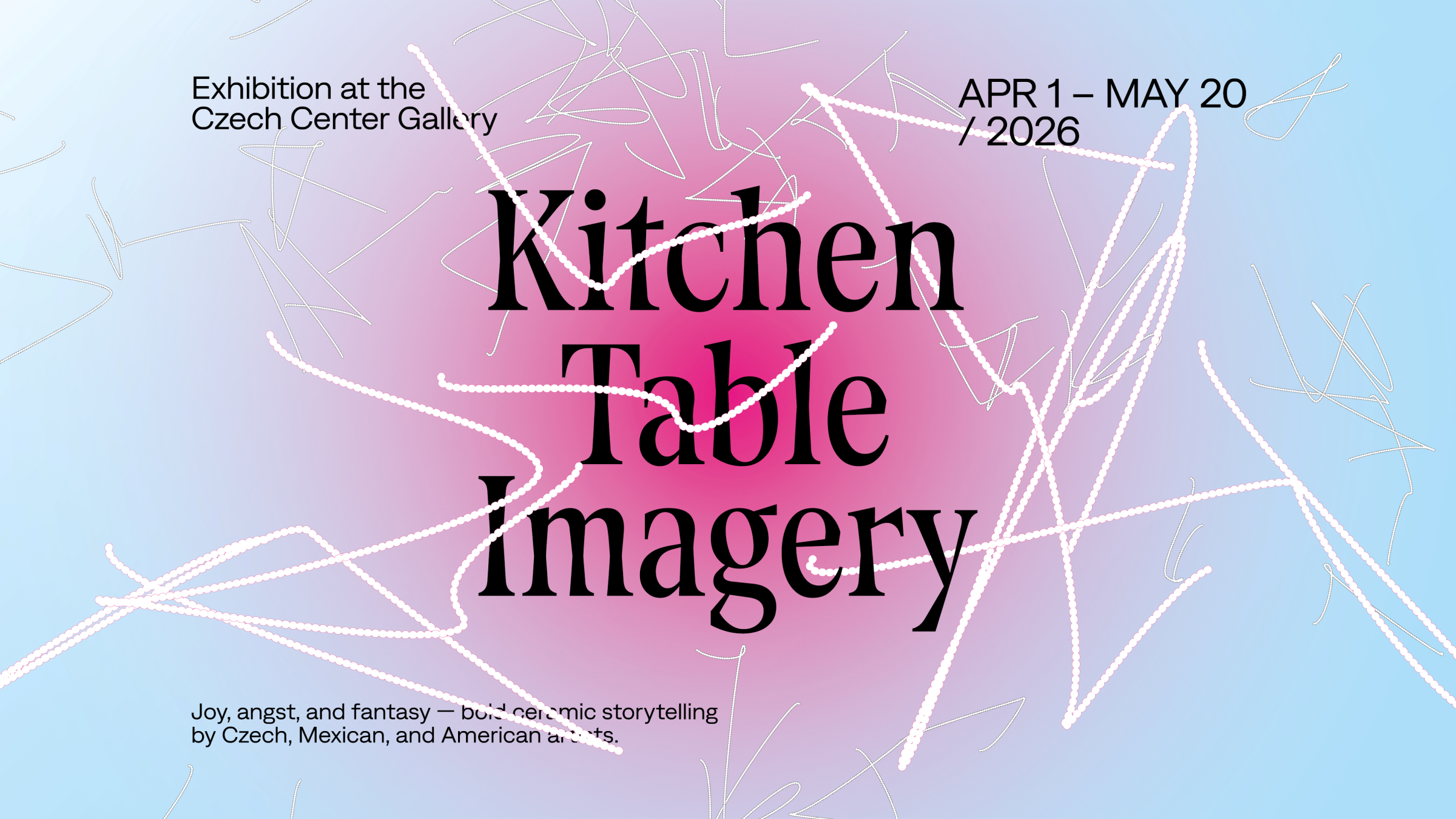
Joy, angst, and fantasy – bold ceramic storytelling by Czech, Mexican, and American artists. Exhibiting eleven artists from three countries to open a dialogue across cultures and generations. Curated by Kryštof Hejný.
Artists from three countries have come together to open a dialogue across cultures and generations. Alongside established practitioners, the exhibition features students and doctoral candidates from the Ceramics Department at Jan Evangelista Purkyně University, whose works move between material experimentation and critical reflection.
By placing emerging and established voices together, the exhibition underscores the vitality of contemporary ceramics and its ability to address ritual, memory, futurity, vulnerability, and social interaction. The proverbial kitchen table becomes a site of encounter, with joy, angst, and danger as occasions for reverie and composition.
Traces of past activity inform new conceits, discarding some and transforming others anew. Czech ceramic artist and educator Antonín Tomášek uses mastery to arrive at a feeling of suspense. His work ranges from critical subversion of the porcelain figure genre to narrative play with personal memory, symbols, and cultural references. Stories are refined to the point of vanishing, their boundaries with experience blurring. We find firm footing in the objects' void of reasoning. What manifests through their presence is the power of things.
Prague-based Mexican artist and educator Jimena Mendoza uses patterns and echoes to shift between cross-cultural cosmogony and the breakdown of our preconceptions about visual similarity. Color and space, original materialities and objets trouvés are animated as corporeal and abstracted signs, together like semantic poetry. Deeply empathetic, Mendoza takes interest in humanity’s ornamental instinct, traditions, and systems of organization.
In his new series, New York City artist Trae Story’s chains and bars appear accusatory and vulnerable to consumption. Materially fragile and just about keeping to a human scale, they speak of the illogic of beauty being made the culprit for society’s failure. The Chinese culture of counterfeits, alien in the West, is contrasted with the urge to replicate perceived beauty. Does beauty die through ubiquity? What if beautiful objects are found ugly, their ugliness tarring anyone at hand?
Tomášek’s pedagogy is set within the declining regional heritage of porcelain manufacture, though his students break toward futurity. Helena Patelisová, Arteom Nurvan, and Josef Kocman eschew the limits of a resurgent genre in favor of adapting technique as rhetoric. Agáta Bourová and Katerina Hermann Klyuchko use rough-and-ready materials, monumentality, and personal experience made into ornament. Technological innovation by Nela Krulišová, Josef Tomšej, and Rozálie Vlachová is pushed to represent aesthetic and symbolic statements.
Looking for voices of their own, these young artists continue to find languages in common.
Hosted by